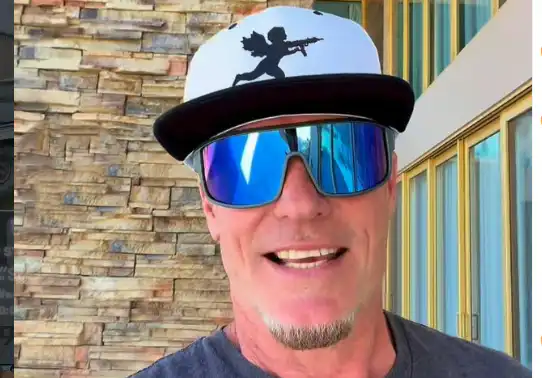
On Friday, June 26, at around 5:24 PM, someone announced on the Freedom 250 social media pages that the National Mall’s FIFA World Cup Fan Zone and Great American State Fair would be closed for the remainder of the day. The weather was cited as the cause. Vanilla Ice, who had devoted much of that afternoon to sharing videos from the enormous stage with the Washington Monument in the background, describing it as “once in a lifetime” and assuring fans that it would be “epic,” would not be playing. About two hours before he was supposed to perform, the show was canceled.
There was no discernible rainfall in Washington, DC, that evening. According to NBC4’s weather desk, there will be “a few evening storms — not everybody sees rain tonight.” According to a forecaster, there was “really not having any concern for severe weather.” After performers like Martina McBride, Bret Michaels, Morris Day, Young MC, and The Commodores withdrew from the Freedom 250 lineup due to deceptive promotional materials, Vanilla Ice was the final remaining headliner of the canceled event, which was billed as the “I Love the 90s” concert. He had justified his stay by claiming that it was a celebration of America’s birthday and had nothing to do with politics.
All of this leads to a very unpleasant insurance question. A covered triggering event is usually required for event cancellation insurance, the standard policy that promoters and organizers carry to guard against financial losses from cancelled performances. One of the most prevalent articles is the weather abandonment clause, which states that the insurer would pay artist performance fees and operational losses such as sunk stage expenses, vendor deposits, and maybe ticket refunds or transfers if conditions render it dangerous or difficult to proceed. Once the claim is legitimate, the artist’s payment under a weather clause is usually assured.
However, the legitimacy of a weather claim when there was no discernible precipitation and the event’s website stated that performances would continue “rain or shine,” paints a more nuanced picture than a simple weather washout. Given the public nature of the event’s problems and the notable lineup changes, some observers quickly surmised that the real reason for the cancellation was the threat of low attendance. The claim procedure becomes significantly more contentious if an insurer’s adjusters examine the same weather data as reporters and come to the same conclusion—that it was difficult to call it a weather cancellation on a dry evening.
By the standards of the live event industry, the financial stakes are real but not very high. For a large-scale performance, Vanilla Ice’s booking price would normally fall within the range covered by event cancellation policies. The greater financial risk is represented by the operational expenses, which include stage building, vendor contracts, and logistical setup for a National Mall event. The claim is limited to the one-day shutdown rather than a loss for the entire event because the fair itself resumed the next day.
More difficult to measure than any insurance number is the damage the cancellation causes to Freedom 250’s already damaged reputation. Before June 26, the event had been navigating public controversy for weeks due to artist exits, concerns over promotional distortion, and political affiliations that made it challenging to recruit popular acts. On a night when the local weather forecast suggested isolated storms at best, the cancellation of the final headliner two hours prior to his scheduled set added a chapter to that story that the organization’s media team will have found challenging to explain to anyone paying close attention.
On Saturday, the US Army jazz group performed on the main stage. There was no rescheduling for Vanilla Ice. There was still the Washington Monument.