There is most likely a rack with a clothing that belonged to a deceased person in a climate-controlled area somewhere in a private home or warehouse in Los Angeles or New York. It may be a Halston dress from the 1970s that a well-known actress once wore to an occasion that was captured on camera by a photographer whose prints are currently on display in museums. It may be a 1980s fitted jacket with a name tag inside that is worth more than the jacket itself. Most likely, the owner doesn’t wear it. That’s not really the point.
The market for the apparel of departed celebrities has been constantly expanding, and the buyers at the top price tiers are not casual collectors. They are those who are prepared to pay appropriately and who recognize the distinction between an item of clothing that was photographed and one that was recorded at a certain point in cultural history. Fashion and memorabilia sales at Christie’s and Sotheby’s have consistently witnessed double-digit appreciation on notable items. This is not the vintage market in the traditional sense; rather, it is more akin to a private cultural archive, supported by individual wealth and driven by a number of variables that are more difficult to distinguish clearly than the auction catalogs imply.
Researchers consistently focus on the psychological aspect. The idea that an object physically touched or worn by a revered person preserves something of that person, some trace or residue that endures after the physical contact has stopped, is the hypothesis that explains a lot of this behavior. This theory is frequently referred to as contagion theory. In the sense that it functions below the level of logical accounting, it sounds magical and most likely is.
However, it clarifies issues that rational accounting finds difficult to understand, such as why the provenance record is just as important as the garment itself or why a dress that has been meticulously cleaned and kept in archive storage for thirty years still fetches a higher price than an identical replica. The dress is not being paid for by the buyer. What was in it is being paid for by them.
This is combined with two more overtly economic incentives at the level of the extremely rich. Investment performance comes first. Over the past 20 years, vintage clothing and pop culture items have outperformed a variety of traditional financial assets. Purchasing a legendary item at auction and keeping it is more than just a sentimental choice; it’s also a way to diversify your portfolio, protect yourself from inflation, and place a wager on the figure’s wardrobe’s ongoing cultural appeal. Exclusivity of a kind that money cannot otherwise provide is the second driving force. Even though modern fashion is pricey, it can be replicated. Within a season, the Balenciaga outfit that a collector might purchase today can be copied, referenced, and imitated. Diana’s 1985 dinner dress isn’t appropriate. Owning it entails having the only copy of that specific item in existence.
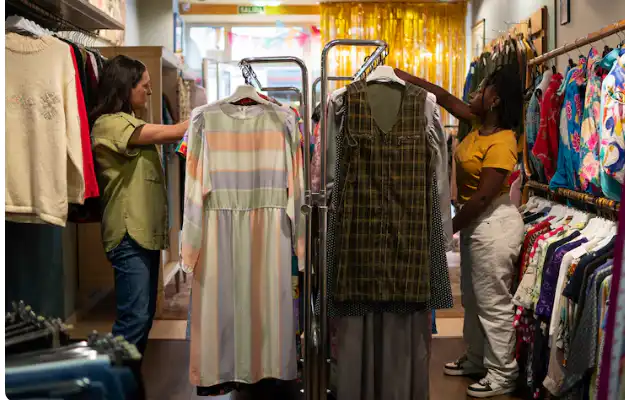
Access to private antique archives has become a competitive advantage for stylists working with high-profile clients. Rarely do brands produce their own vintage pieces for use on the red carpet nowadays. A stylist can have access to silhouettes that are simply unavailable through commercial channels by working with a collector who has a well-documented collection of vintage clothing. As a result, these collections generate a secondary economy that enhances the value of the underlying assets through loans, temporary arrangements, and partnerships with institutions for exhibitions.