On June 22, 2026, Clive Davis passed away at the age of 94. The tributes in the days that followed concentrated on the artists, which is what practically everyone who writes about Davis focuses on. As a teenager, Whitney Houston entered his office and left with a career that would define popular music for twenty years. Puff Daddy, Carlos Santana, Aerosmith, Bruce Springsteen, Janis Joplin, and Alicia Keys. The number of musicians whose paths he changed is so extensive that it is truly impossible to comprehend the current state of the music industry without knowing the choices Davis made during his six decades at the top of the industry.
The financial system that underpinned all of that received less emphasis in such tributes. With an estimated net worth of over $850 million, Davis was not only a prosperous music executive but also among the richest individuals in the entertainment sector. And the walls of his Manhattan residence held a sizable portion of that wealth.
Over the course of his career, Davis amassed a fine art collection estimated at about $100 million, which includes prestigious pieces by artists like David Hockney, Andy Warhol, and Picasso. museum-caliber items that have been accumulated over time with the kind of deliberate purpose that sets a serious collection apart from the ornamental purchases of a wealthy individual. Perhaps the most personally unique piece is the Hockney portrait of Davis, which was later added to the collection of the Smithsonian National Portrait Gallery, guaranteeing that Davis’s image would be institutionally preserved alongside the political figures, scientists, and cultural leaders who make up the museum’s permanent record.
This kind of fine art behaves differently from other asset classes in ways that most financial counselors only partially explain and that sophisticated collectors comprehend. A Picasso bought in one decade typically appreciates over the ensuing decades in ways that mirror broader art market movements, which have historically outpaced inflation over extended periods of time while remaining largely immune to the volatility of the equity market, which can quickly devalue a stock portfolio. In addition to needing storage and insurance and not paying dividends, art can retain a substantial amount of purchasing power during economic cycles that weaken other asset classes. It also does not lose value as interest rates fluctuate.
A serious art collection with useful financial value also has a status component. Davis’s collection, which included items that belong in major museum shows, created an institutional link with galleries, auction houses, and cultural organizations that may be used in a number of ways. Exhibition loans preserve a work’s prominence and scholarly attention, which bolsters its worth. Relationships with the major auction houses allow for discreet sales at the collector’s preferred times. The purchase of the Hockney image by the Smithsonian is an institutional endorsement that speaks to the collection as a whole.
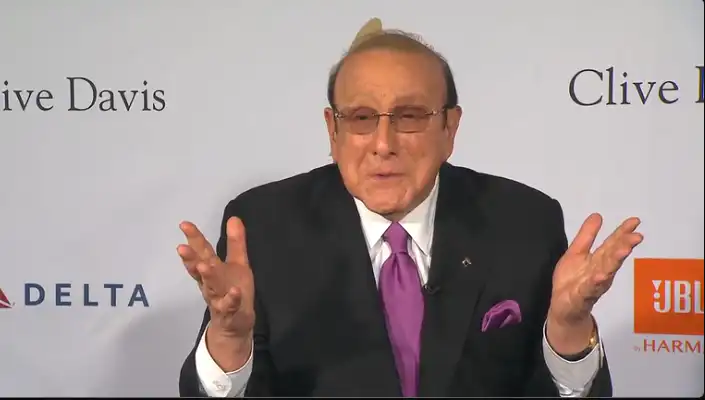
The fact that Davis’s overall financial situation was supported by several pillars is a significant finding in and of itself. The money that built everything else came from the music industry’s earnings, which included royalties, catalog stakes, and executive compensation accrued over decades at Columbia Records, Arista, and later J Records and RCA. As a person whose primary world was New York, Manhattan real estate served as both a material store of value and a symbolic anchor for his identity. Together with these, the art collection represented a third category: valuing assets that had cultural significance, linked him to a different social class than the music industry, and could be shown, lent, discussed, and ultimately sold in ways that stock portfolios cannot.