Mel Brooks turned 100 on June 28, 2026. In honor of the event, the American Film Institute declared Blazing Saddles to be the funniest movie ever made, overtaking Some Like It Hot, which had held the title for years. According to reports, Brooks, who has always insisted that Some Like It Hot was not as humorous as his films, was happy. In an appropriately Brooksian statement, Bob Gazzale of the AFI accepted the change, saying, “We’re happy to right this wrong as Mel celebrates his centennial.” Being the king is enjoyable.
Born Melvin Kaminsky in Brooklyn, New York, Brooks performed in the Borscht Belt and served in the Army during World War II before being hired as a writer by Sid Caesar. He met Carl Reiner on Your Show of Shows, and the two became longtime friends and collaborators. In the end, the two produced the 2000 Year Old Man sketches, in which Brooks improvised responses that were both ludicrous and philosophically valid to Reiner’s concerns about history, mortality, and human nature. It was a comedy model based on the idea that facing history head-on and making it seem absurd is the most humorous way to deal with its darkness.
Blazing Saddles ran with that idea in 1974, which is why its ranking at the top of the AFI list seems fitting for this specific time. The movie is about racism, particularly racism in the American West as a genre and racism in the United States now as a reality. It doesn’t take a gentle approach to the topic. It places a Black sheriff in a town full of people who don’t want one and then, with a great deal of comedic accuracy, observes how bigotry’s stupidity and ugliness become the source of the joke rather than the topic of a lecture. The movie’s racists aren’t scary. They are idiots. Brooks realized that calling them idiots was a better way to deal with them than sincere condemnation could ever be.
Mel Brooks: The 99 Year Old Man! is the title of Judd Apatow’s retrospective documentary on Brooks, which pays homage to the 2000 Year Old Man sketches and documents a comedian who is still thinking, speaking, and being funny. Months before the centennial, in January 2026, the movie debuted. In it, Brooks says something that seems straightforward but turns out to be accurate: “I was born to make people laugh.” I therefore do that.
The particular topic of what Brooks’ comedy does that more circumspect comedy cannot is worth pondering as the birthday goes by, the AFI list is updated, and the tributes mount. His debut movie, The Producers, based its main joke on the idea that Hitler could be used as a comedy vehicle and that it was necessary rather than irreverent to make the most despised person of the twentieth century the subject of farce. Springtime for Hitler is the title of the show inside the movie. As Brooks repeatedly stated, the reasoning was that when you laugh at something, you take away its potency. “If your enemy is laughing, how can he bludgeon you to death?” is not merely a joke. It’s a real debate regarding the purpose of comedy.
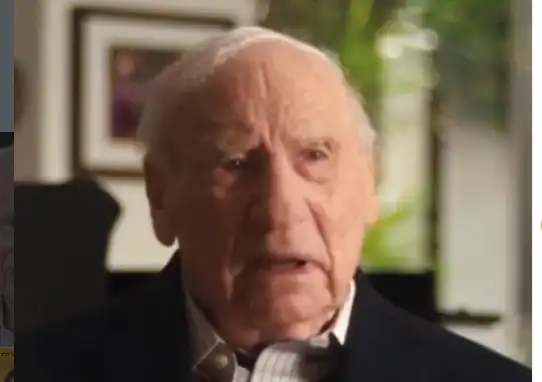
In 2026, that debate takes a different turn than it did in 1967 or 1974. When it comes to humor, American culture has become much more cautious about who is permitted to make jokes, what they can target, and the repercussions of making a mistake based on whatever criteria is now in use. A portion of such caution has yielded positive results. A lot of it has resulted in comedy that is less ready to take chances and, as a result, less able to achieve what Blazing Saddles does so brilliantly: make a room full of people with diverse political beliefs and worries laugh simultaneously at the same joke.