K. Bhagyaraj achieved something unique in Tamil cinema’s lengthy history of elaborate settings, big-budget celebrity cars, and action spectacles. He gave meaning to little tales. A couple fighting in the kitchen. A man from the working class navigating the home. scenarios that viewers were familiar with since they had experienced them firsthand rather than only in their dreams. And he relied almost solely on that hunch to build a career and a financial legacy estimated at up to Rs 70 crore.
In any nebulous cultural sense, the term “Thirai Kathai Mannan,” the King of Screenplay, was not honorific. It explained a particular technical ability: the capacity to create narratives that resonated with large audiences via character rather than spectacle. Over the course of more than 25 directing projects and more than 75 acting credits, Bhagyaraj spent five decades honing that talent. What he did with that ability after he acquired it was what set his career’s economics apart.
He turned into a one-man show in a significant way. Bhagyaraj kept production expenses low while maintaining creative control while writing, directing, acting, and editing his own films. His integrated approach was mirrored in the returns of films like Mundhanai Mudichu and Andha 7 Naatkal, which were produced without the overhead of a traditional studio setup or the costly list of collaborators most projects require. The cost structure varies when the principal actor, director, and writer are all the same person. It’s not a small operational detail. It serves as the cornerstone of a sustainable model.
His career’s cross-linguistic component greatly increased the financial footprint. In the mid-1980s, Amitabh Bachchan’s Bollywood film Aakhree Raasta, which was based on his screenplay Oru Kaidhiyin Diary, became a huge commercial hit. It is not often for a Tamil screenplay to find its way into a Bollywood production starring one of the top actors of the time. It created business connections and royalty streams that went well beyond Tamil Nadu.
With a similar sense of control over the product, Bhagyaraj expanded beyond film into print and television. He started the Tamil weekly journal Bhagya and served as its editor. He wrote books. He made money from hundreds of episodes of television serials, such as Rules Rangachari on DD Podhigai. These activities weren’t incidental. They were purposeful expansions of a personal brand that was based only on his storytelling’s trustworthiness.
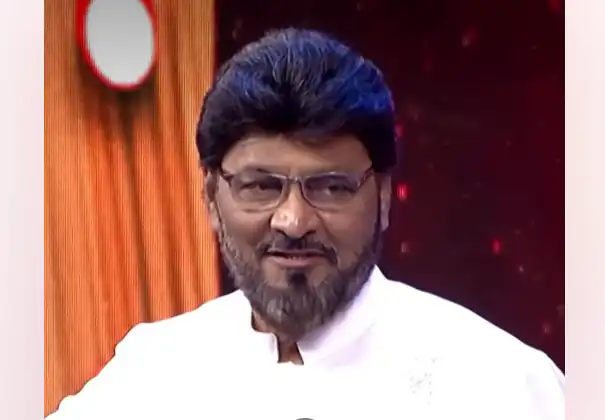
His wealth was a reflection of a profession focused more on accumulation than spectacle. In Nungambakkam, one of Chennai’s most desired central areas, a prime residential property was valued at about Rs 10 crore on its own. His film catalog’s royalties continued to bring in money for many years. The announcement by Tamil Nadu Chief Minister C. Joseph Vijay that Bhagyaraj’s farewell ceremonies will get full state honors was an acknowledgement of not only his cultural contribution but also of what a single, unwavering creative vision can accomplish over a half-century.